
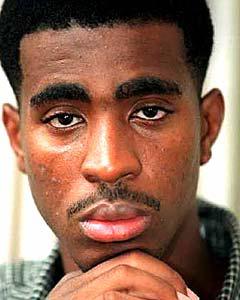
Orlando Anderson Biography: Early Life, Tupac Shakur Connection, Death and Legacy
Orlando Tive Anderson was an American gang member from Compton, California, whose name became closely associated with one of the most enduring mysteries in hip-hop history: the 1996 murder of rapper Tupac Shakur.
Anderson was a member of the South Side Compton Crips and became a major figure in discussions surrounding Tupac’s death after a physical confrontation between the two men at the MGM Grand in Las Vegas on September 7, 1996. The altercation occurred only hours before Tupac was fatally shot in a drive-by attack.
Although Anderson was investigated as a suspect in the case and his name remained central to theories about the shooting, he denied involvement and was never charged or convicted in connection with Tupac’s murder.
Anderson died less than two years later after being shot in Compton, California. His death meant that he never faced a trial over the allegations surrounding Tupac’s killing.
Decades later, his name returned to the spotlight as his uncle, Duane “Keffe D” Davis, became the first person charged in connection with Tupac Shakur’s murder. The prosecution’s case has renewed public interest in Anderson’s life, his relationship with Davis, the MGM Grand confrontation, and the unanswered questions surrounding the 1996 shooting.
Orlando Anderson Early Life and Family Background
Orlando Tive Anderson was born on August 13, 1974, in Compton, California, United States.
He grew up in Compton during a period when gang activity and street violence were major problems in parts of Los Angeles County. His parents, Harvey Lee Anderson and Charlotte Davis, separated when he was young, and Anderson was largely raised by members of his extended family.
His mother worked as a bookkeeper, while his wider family provided much of the support during his childhood. Accounts of his early years describe him as being close to his relatives despite the difficult environment surrounding him.
As a teenager, Anderson became associated with the South Side Compton Crips. His involvement with the street gang would later become an important part of his public identity and would place him within the wider gang rivalry that surrounded the West Coast hip-hop scene during the 1990s.
Anderson was also related to Duane “Keffe D” Davis, who decades later became a central figure in the investigation into Tupac Shakur’s murder.
Orlando Anderson Education
Anderson attended Taft High School before transferring to Manuel Dominguez High School in Compton.
He eventually graduated from Manuel Dominguez High School. There is little reliable public information about his academic interests or activities beyond his secondary education, and there is no well-established record indicating that he attended a university.
Much of the available information about Anderson’s adult life focuses on his association with the South Side Compton Crips and the events that ultimately connected his name to Tupac Shakur’s murder investigation.
Orlando Anderson and the South Side Compton Crips
During his teenage years, Anderson became associated with the South Side Compton Crips, a street gang based in Compton.
His association with the group placed him within the wider gang conflict that existed between the Crips and Bloods and also intersected with tensions surrounding members of the Death Row Records camp.
The relationship between street gangs and the music industry became particularly significant during the mid-1990s, when the rivalry between Death Row Records and Bad Boy Records was increasingly connected to conflicts between groups associated with the two sides.
Anderson’s name became especially prominent because of his alleged involvement in a confrontation with Tupac Shakur and members of Death Row Records shortly before Tupac was killed.
The MGM Grand Confrontation With Tupac Shakur
One of the most important events in Anderson’s life occurred on September 7, 1996.
That evening, Tupac Shakur, Suge Knight and members of their entourage were at the MGM Grand in Las Vegas to watch Mike Tyson fight Bruce Seldon.
After the boxing match, Anderson encountered members of Tupac’s entourage inside the hotel.
A physical confrontation followed, with surveillance footage later showing several people attacking Anderson. The altercation was reportedly connected to an earlier incident involving a Death Row associate and Anderson.
The confrontation became highly significant because Tupac was shot only a few hours later.
Tupac was riding in a BMW driven by Suge Knight when another vehicle pulled alongside them at a traffic intersection on Las Vegas Boulevard. The occupants of the other vehicle opened fire, striking Tupac multiple times.
The rapper was taken to University Medical Center of Southern Nevada, where he remained hospitalized for several days before dying on September 13, 1996.
Because of the timing of the MGM Grand confrontation, investigators and journalists examined Anderson’s possible involvement in the shooting.
Was Orlando Anderson Responsible for Tupac’s Murder?
Anderson was identified as a suspect in the investigation into Tupac Shakur’s murder, but it is important to distinguish allegations from established facts.
Anderson denied involvement in the shooting and was never charged with Tupac’s murder.
For many years, the lack of an arrest in the case contributed to numerous theories about who ordered and carried out the attack. Anderson’s presence at the MGM Grand confrontation became one of the central pieces of circumstantial evidence used by people attempting to explain the motive behind Tupac’s killing.
However, there was never a criminal trial establishing that Anderson was the gunman or that he participated in the murder.
Anderson’s death in 1998 further complicated the investigation because he could never be questioned or prosecuted in court over the allegations.
Orlando Anderson’s Personal Life
Despite his later notoriety, Anderson’s personal life received far less attention than his alleged connection to Tupac’s murder.
He was reportedly in a relationship with Rasheena Smith, whom he knew from their school years. The couple had children together and lived in Lakewood, California, for a period.
Public accounts identify several of Anderson’s children, including Krystal, Courtney and Ariel, although information about his complete family structure varies across sources.
Anderson was known to be close to members of his extended family. His half-brother Pooh later spoke publicly about him and rejected some of the claims made about Anderson after Tupac’s death.
Because Anderson died young and lived largely outside mainstream public life, detailed information about his relationships, interests and day-to-day activities remains limited.
Orlando Anderson’s Death
Orlando Anderson died on May 29, 1998, in Compton, California.
He was shot during an altercation at a car wash and was taken to a medical facility for treatment. He later died from his injuries at the age of 23.
His death occurred less than two years after Tupac Shakur’s murder.
Anderson’s killing was investigated separately from Tupac’s murder, and there has been no established legal finding that his death was connected to Tupac’s shooting.
His death nevertheless added another layer of mystery to the case. Because he had been publicly identified as a suspect in Tupac’s murder investigation, his death meant that he would never face a courtroom over the allegations.
Duane “Keffe D” Davis and the Tupac Murder Case
Interest in Orlando Anderson increased significantly decades after his death because of the legal case against his uncle, Duane “Keffe D” Davis.
Davis has acknowledged being present in the vehicle from which the shots were fired, although the precise circumstances and legal interpretation of his statements have been heavily disputed.
Prosecutors have alleged that the shooting was retaliation for the MGM Grand confrontation in which Anderson was beaten by Tupac and members of his entourage.
According to the prosecution’s theory, the confrontation created a motive for retaliation and Davis was involved in organizing the attack.
Davis has pleaded not guilty to the murder charge.
Read Also:
The case has renewed attention on Anderson because prosecutors have repeatedly referred to the MGM Grand incident and Anderson’s role in the events leading up to the shooting.
However, Anderson himself was never charged with Tupac’s murder and should not be described as legally responsible for the killing.
Orlando Anderson’s Age, Nationality and Physical Appearance
Orlando Anderson was born on August 13, 1974, and died on May 29, 1998.
He was 23 years old at the time of his death.
If he had lived until 2026, he would have been 52 years old.
Anderson was an American citizen and spent most of his life in California.
His height is commonly listed online at approximately 6 feet 1 inch (1.85 metres), although measurements vary between sources.
There is no sufficiently reliable public information confirming Anderson’s religious beliefs, so claims about his religion should be treated cautiously.
Orlando Anderson’s Legacy
Orlando Anderson remains one of the most frequently mentioned figures in discussions about Tupac Shakur’s murder.
His importance to the story stems primarily from three facts: his association with the South Side Compton Crips, his physical confrontation with Tupac at the MGM Grand on the night of September 7, 1996, and his subsequent identification as a suspect in the murder investigation.
Yet the distinction between suspicion and proof is important.
Anderson was never convicted or charged with killing Tupac Shakur. He consistently denied involvement, and no court ever established that he was responsible for the shooting.
His death in 1998 prevented the allegations against him from ever being tested in a criminal trial.
The subsequent prosecution of his uncle, Duane “Keffe D” Davis, has once again brought Anderson’s name into public discussions about the case. The proceedings have encouraged renewed examination of the events surrounding the MGM Grand confrontation and the shooting that followed.
For many people, Anderson remains an important but unresolved figure in one of the most famous unsolved cases in music history.
Frequently Asked Questions
Who was Orlando Anderson?
Orlando Anderson was an American gang member from Compton, California, who was associated with the South Side Compton Crips. He became widely known because of his connection to the investigation into Tupac Shakur’s 1996 murder.
When was Orlando Anderson born?
Orlando Anderson was born on August 13, 1974, in Compton, California.
How old was Orlando Anderson when he died?
He was 23 years old when he died on May 29, 1998.
How did Orlando Anderson die?
Anderson was shot in Compton, California, on May 29, 1998. He later died from his injuries.
Was Orlando Anderson charged with Tupac Shakur’s murder?
No. Anderson was investigated as a suspect but was never charged or convicted in connection with Tupac Shakur’s murder.
Did Orlando Anderson fight Tupac Shakur?
Anderson was involved in a physical confrontation with Tupac and members of his entourage at the MGM Grand in Las Vegas on September 7, 1996, just hours before Tupac was shot.
Was Orlando Anderson Tupac’s killer?
There was never a court finding that Anderson killed Tupac. He denied involvement in the shooting and was never charged with the murder.
Who was Orlando Anderson’s uncle?
His uncle was Duane “Keffe D” Davis, who became a defendant in the case surrounding Tupac Shakur’s murder.
Did Orlando Anderson have children?
Yes. Public accounts identify children including Krystal, Courtney and Ariel, although information about the full number of his children varies.
What was Orlando Anderson’s nationality?
He was American and was born in Compton, California.
What was Orlando Anderson’s religion?
His religion has not been reliably established through strong public sources, so specific claims about his religious beliefs should be treated with caution.
How tall was Orlando Anderson?
His height is commonly reported as approximately 6 feet 1 inch (1.85 metres), although online sources differ.
Why is Orlando Anderson still discussed today?
His name remains closely connected to Tupac Shakur’s murder because of the MGM Grand confrontation and his identification as a suspect. Interest increased again following the criminal case involving his uncle, Duane “Keffe D” Davis.
Disclaimer: All Biographies and Contents Published on 9jaEntHub are for Knowledge purposes; However, Please Don’t Hesitate to Reach Out to Us for Any Corrections, Suggestions, or Copyright Infringement!! Contact Us Here.


